When the Stress Alarm Won’t Turn Off
Cortisol gets a terrible reputation.
Online it’s often portrayed as the villain behind everything — belly fat, weight gain, anxiety, poor sleep.
But cortisol isn’t the enemy.
In fact, cortisol is one of the body’s most important survival tools.
You can think of it as the body’s stress alarm.
When something demands attention — low blood sugar, poor sleep, emotional stress, illness, physical exertion — cortisol helps mobilize the resources to deal with it.
It increases alertness.
It releases energy.
It sharpens focus.
That’s incredibly useful.
The problem isn’t that the alarm exists.
The problem is when the alarm never gets to turn off.
In a healthy system, cortisol follows a natural rhythm:
It rises in the morning to help you wake up and mobilize energy.
It gradually declines through the day.
By evening, levels fall low enough to allow melatonin to rise and sleep to happen.
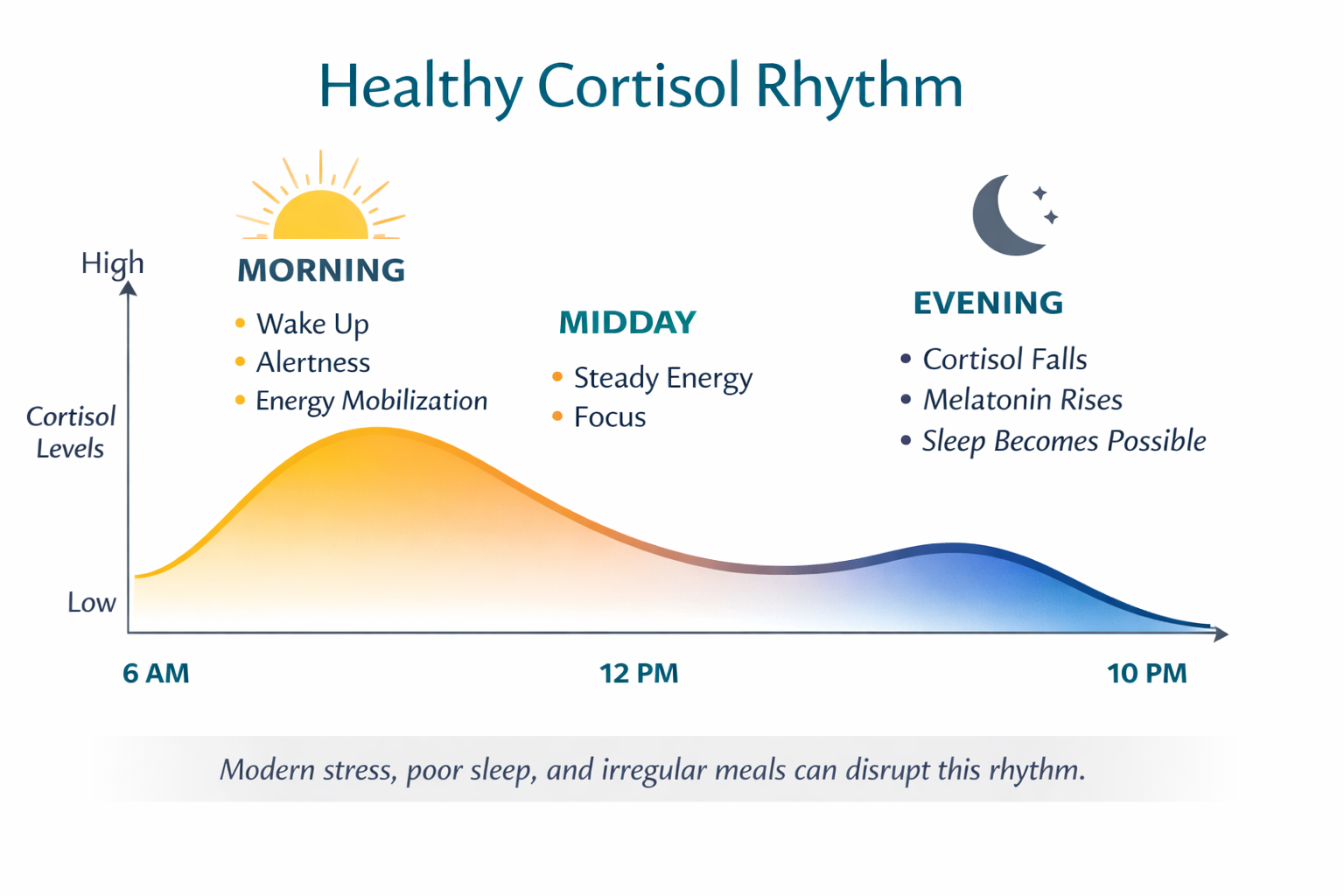
When that rhythm is working well, we experience:
steady energy … clear thinking … balanced appetite … restorative sleep
But we know that's not the reality … at least a lot of the time. Because our “midlife” lives bring a lot for us to manage, all at once – like demanding careers, kids launching, aging parents, hormonal shifts, constant digital stimulation.
It’s a stage of life where, as I often say to clients, we’re holding much more than our own lives. And that's why stress can seem like a constant companion.
When stress signals accumulate, cortisol can remain elevated longer than it should.
And over time, that constant alarm can begin to affect energy, appetite, sleep, and metabolism.
So, what happens when metabolism stays elevated?
When cortisol remains high for long periods, the body shifts into protective mode.
It prepares for a world where energy might be scarce or danger might appear.
So it does four things:
It raises blood sugar.
Cortisol releases stored glucose so the body has quick fuel available.It increases appetite for fast energy.
Which often shows up as cravings for sugar or refined carbohydrates.It encourages fat storage — particularly around the abdomen.Fat cells in the abdominal region contain more cortisol receptors than many other areas of the body.
And sleep can become more difficult. When cortisol stays elevated into the evening, it can interfere with melatonin — the hormone that helps us fall asleep. Many people notice this as difficulty falling asleep, waking during the night, or that familiar “wired but tired”feeling.
From a survival perspective, this makes sense.
Abdominal fat is metabolically active and can release energy quickly if needed.
But when the stress alarm stays on too long, this protective mechanism can contribute to the pattern sometimes referred to as “cortisol belly.”
The solution isn’t extreme dieting.
It’s restoring stability to the system … and our bodies love predictability.
When the system knows energy is arriving consistently, stress chemistry begins to settle.
One of the most powerful ways to create that stability is through how we structure our meals.
Meals that combine protein, fiber-rich vegetables, and slow-digesting carbohydrates digest more gradually and provide steady energy.
Foods like: lentils, beans, quinoa, farro, oats, sweet potatoes release glucose slowly into the bloodstream. Instead of a spike in blood sugar followed by a crash, they produce a much steadier energy curve.
And that steady curve sends an important signal to the brain:
Energy is reliable.
When blood sugar crashes, the brain often interprets that as a stress signal and triggers more cortisol.
But when meals are balanced and digestion is slower, the body doesn’t need to keep activating the alarm.
Over time, these small signals of stability can help bring the system back toward balance.
Women are often more sensitive to blood sugar swings and stress signals, especially during the hormonal transitions of midlife.
Changes in estrogen influence how the body regulates glucose, appetite, and stress chemistry. When meals are skipped, workouts are done fasted, or energy intake becomes inconsistent, the body may interpret that as a stress signal.
Which can lead to:
stronger cortisol responses
fatigue
increased cravings
more central fat storage
This is one reason why strategies that may work well for younger people — or for men — don’t always work as well for women in midlife.
For many women, the body responds best to steady nourishment and consistent signals of safety.
The Signals That Help Turn the Alarm Down
The encouraging news is that cortisol responds quickly to supportive lifestyle signals.
Some of the most powerful include:
strength training
morning daylight exposure
consistent sleep timing
protein-rich breakfasts
balanced meals with protein + fiber + slow carbohydrates
regular eating patterns
None of these need to be extreme.
In fact, the body responds best to consistent, predictable habits.
Small structural choices repeated day after day.
It’s about creating an environment where the body can regulate itself.
Stable nourishment.
Consistent movement.
Reliable sleep rhythms.
Moments of recovery built into the day.
Because the body handles stress remarkably well — as long as it also receives signals of safety and stability.
And often those signals come from the quiet structure of everyday habits.
A meal that arrives on time.
A plate that provides steady energy.
A simple reminder to the body that the alarm doesn’t need to stay on.
Today’s small experiment: notice how your body feels after a meal that provides steady nourishment - a good balance of protein, fiber and slow carbs.
Sometimes the smallest signals are the ones the body responds to most. And if you have any questions - please don't hesitate to reach out.