Slow Carbs vs. Fast Carbs: Clearing up the Carb Confusion
Carbs might be the most confusing nutrition topic out there.
I mean… how can a piece of cake and a piece of broccoli both be in the same food category called “carbs”?
No wonder people feel overwhelmed when navigating the tricky world of nutrition.
We hear:
“Stay away from carbs!”
“Carbs make you gain weight!”
“Carbs are bad for blood sugar!”
And yet … a plant-forward, longevity-supportive way of eating — which so many of us strive for — is built on foods that are, in fact, carbs.
So let’s clean up the confusion.
All carbs are not the same.
Your body doesn’t treat them the same.
And once you understand the difference between slow carbs, faster whole carbs, and ultra-processed carbs, making nourishing choices becomes so much easier — especially in midlife when our metabolism naturally shifts.
Let’s break it all down in a way that’s simple, practical, and clear.
Slow Carbs = Steady Energy
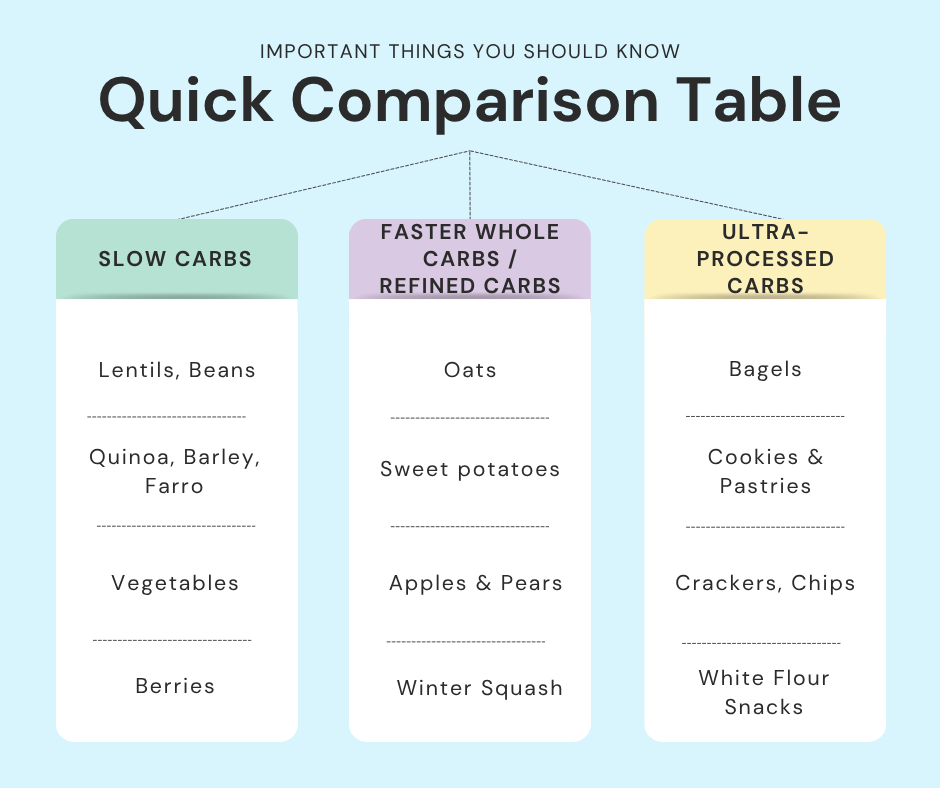
Slow carbs are higher in fiber and digest more gradually, giving you:
stable blood sugar
fewer cravings
more energy
better mood & focus
These include:
Beans and lentils
Intact whole grains like quinoa, barley, farro
Vegetables
Most non-tropical fruits (berries are especially steady)
These carbs break down slowly and help keep you full, calm, and energized. Not to forget, they are also packed with nutrients.
Faster Whole Carbs (Individual Variation Matters)
Some whole foods — like oats, sweet potatoes, winter squash, apples, and pears — digest more quickly and can create a sharper rise in glucose depending on:
portion size
ripeness (for fruit)
pairing with protein or fat
your unique glucose response
These foods aren’t “bad.”
They’re simply faster than slow carbs, and each person responds differently.
And here’s the important part: these foods are incredibly nutritious and absolutely belong on your plate.
The only reason I call them “faster” is to bring awareness — not avoidance. Pairing them with protein, vegetables, or healthy fats naturally slows digestion and helps most midlife bodies feel steadier.
Ultra-Processed Carbs (Best Kept Occasional)
Ultra-processed carbs — like cookies, pastries, crackers, bagels, and most white-flour snacks — digest extremely quickly because they lack fiber and nutrients.
They:
spike blood sugar
leave you hungry sooner
create more cravings
offer very little nourishment
These foods are enjoyable on occasion, but they’re not the kind of fuel that supports daily energy, metabolic health, or longevity — especially in midlife.
Your body deserves better.
Footnote 1: Bananas & Tropical Fruits
Bananas and tropical fruits tend to be higher-glycemic and can create sharper glucose rises for many people. There’s no need to avoid them — just pair them well and notice how you feel.
Footnote 2: What About Pasta?
Pasta isn’t ultra-processed, but it is refined and can digest quickly.
A few interesting notes:
Dried boxed pasta often spikes less than fresh pasta (tighter starch structure)
Cooling or freezing pasta (and bread) increases resistant starch
Reheating maintains the benefit
Resistant Starch: The Carb That Feeds Your Gut
When you cook, cool, and then reheat certain carbs, they form resistant starch — a type of starch your body digests more slowly.
Resistant starch:
Acts like fiber
Helps steady glucose
Feeds beneficial gut bacteria
Supports the gut lining
Helps produce butyrate (key for immune + gut health)
Works beautifully with:
Rice
Potatoes
Oats (overnight oats!)
Pasta
Cooling increases resistant starch.
Reheating preserves it.
A simple way to make carbs gentler and more gut-friendly.
Slow Carb Prep: Simple Things to Make Ahead
Choose one or two for the week:
Cooked lentils
Chickpeas or black beans
Quinoa or barley
Roasted sweet potatoes
Overnight oats
Cooked/cooled rice for reheating
Add a scoop to vegetables + protein + healthy fat, and meals become effortless. Toss into a salad or stir into scrambled eggs.
Why This Matters in Midlife
As estrogen declines, we naturally become more sensitive to glucose.
Choosing slow carbs and gut-friendly starches helps:
Stabilize appetite
Reduce afternoon crashes
Support metabolic health
Calm inflammation
Improve sleep
Make weight regulation easier
Small shifts. Big support.
If This Speaks to You…
This is exactly the kind of practical, midlife-specific strategy I teach inside RECLAIM — my 5-month coaching program focused on longevity, steady energy, metabolism, strength, and sustainable daily habits.
Cohorts start in January and September.
If you’d like to learn more — or be added to the interest list — join the waitlist.
Or learn more about the program here: