One Anchor Habit for Steady Energy
At the start of a new year, I like to zoom out and think about key anchor habits — the habits that quietly hold everything else together, no matter how busy or unpredictable life gets.
For me, one of those critical anchors is prioritizing protein-centric meals. (Fiber matters too — but I'll save that conversation for another day.)
The conversation around getting enough protein into our diets has been in the forefront for the past couple of years … and since we’re still in the mindset of building for the year ahead, I want to talk about protein in a way that’s simple, practical, and genuinely helpful.
Before we get into the specifics, a bit of context.
Many protein experts — including physicians who focus on muscle, metabolism, and healthy aging — often reference a benchmark of about 1 gram of protein per pound of ideal body weight.
That’s a lot.
And for many people, it can feel overwhelming right out of the gate.
So instead of trying to overhaul everything at once, let’s break this down into something more manageable.
If increasing your protein intake is something you’ve been thinking about, but haven’t quite figured out how to approach, start here:
Aim for ~30 grams of protein in your first meal.
One small habit.
One steady anchor.
And a change that tends to ripple out in all the right ways.
Of course, protein needs come with nuance — including your size, sex, activity level, and overall goals. A highly active person or someone with more lean mass may need more; others may do just fine with less.
Think of 30 grams not as a rule, but as a useful starting point— a simple anchor you can adjust over time.
Most people under-eat protein in the morning and try to “catch up” later. What I see over and over is that this often leads to:
Energy dips by late morning
Cravings that feel louder than they should
That “why am I starving already?” feeling by mid-morning
Starting the day with enough protein helps:
Stabilize blood sugar
Support muscle and metabolism (especially important in midlife)
Keep energy and appetite steadier throughout the day
In fact, you may have to remind yourself to eat when the lunch hour rolls around!
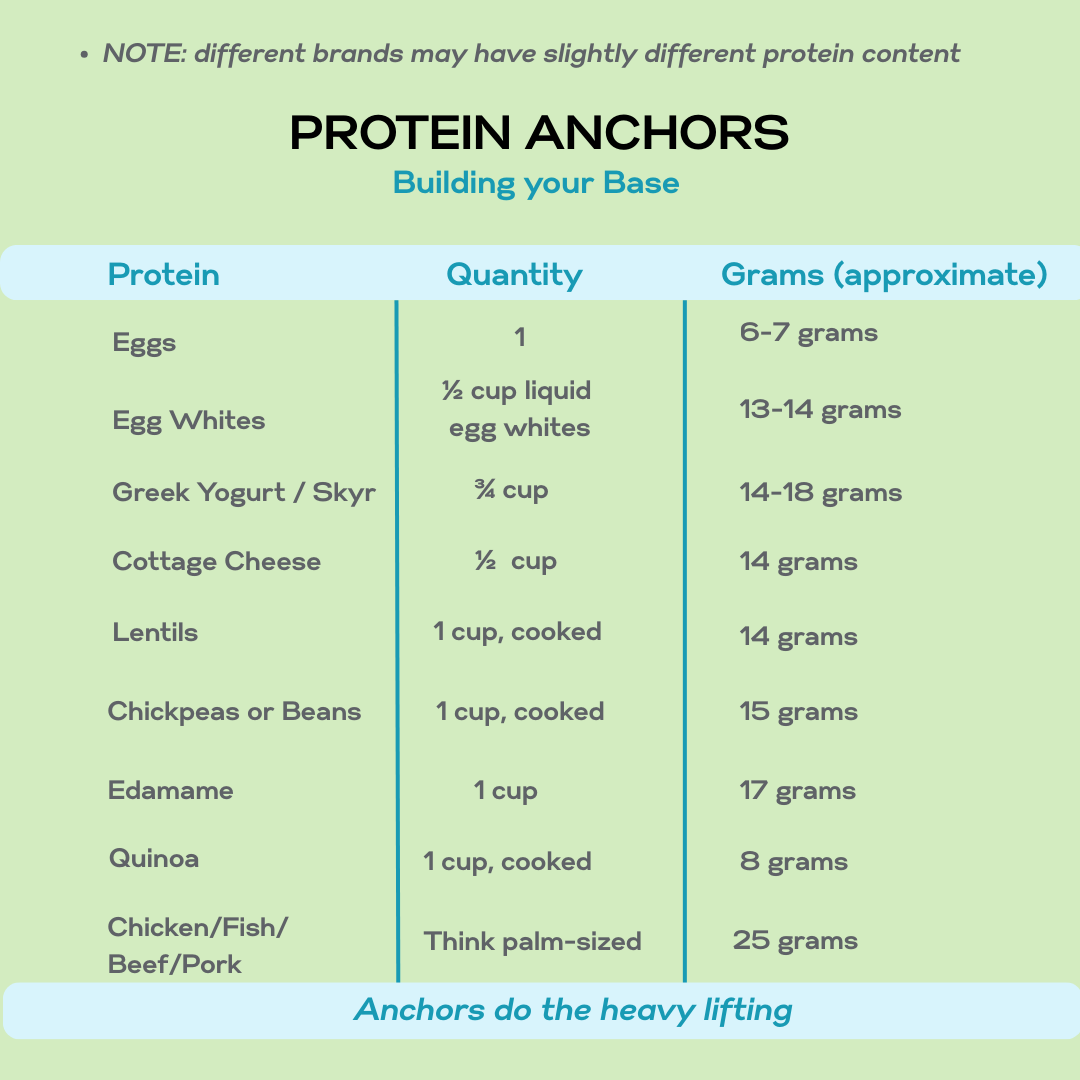
So let's start with Protein Anchors.
These are your foundation foods — the proteins that form the base of a meal. When you’re trying to work toward ~30 grams of protein, this is where most of it will come from.
Think of anchor proteins as the non-negotiables that help stabilize energy, support muscle, and make the rest of the day feel easier.
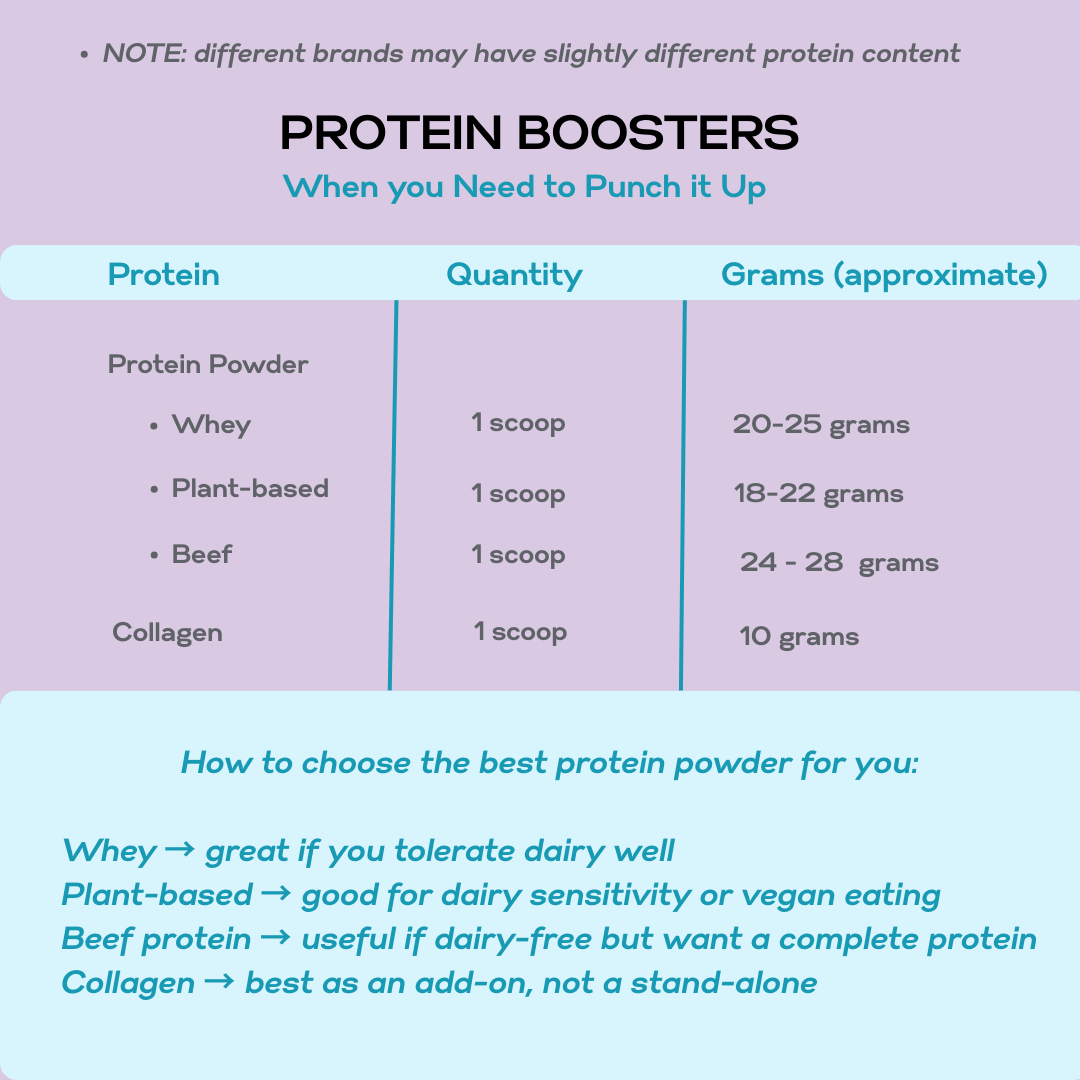
Next up, Protein Boosters. They are an easy way to close the gapwhen whole foods alone don’t quite get you to your target. They are protein tools, and especially helpful when you need a boost to get over 30.
Think protein smoothie, or mixing in some protein powder into your greek yogurt … even stirring protein powder into your coffee offers a great solution for hitting protein goals.
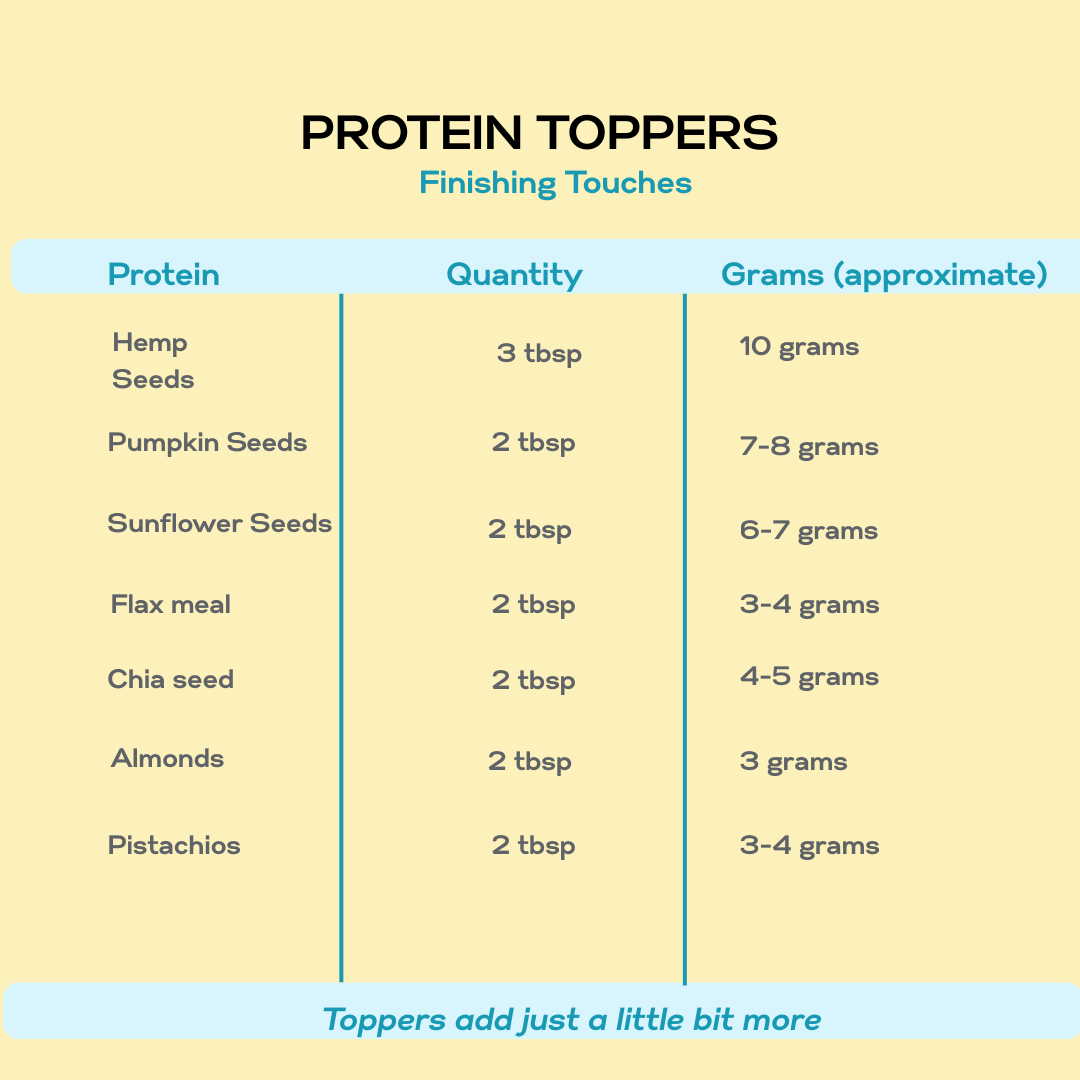
And then, the Protein Toppers. Protein toppers add a few extra grams, along with texture, flavor, and staying power.
They’re not meant to carry the meal — but when layered onto anchors or boosters, they help nudge protein intake higher while bringing fiber, healthy fats, and satisfaction.
Think: finishing touches.
All of this can feel abstract until you see what it actually looks like on a plate.
One thing I’ve learned over the years is that morning appetites vary wildly. Some people want savory. Some want something cold. Some want something that feels more like a treat.
So instead of a single “ideal” breakfast, here are three very different ways to build that ~30-gram protein anchor — depending on your morning palate.
-
This is one of my go-to moves.
And yes, I did have to get used to the idea of eating last night's dinner for breakfast.
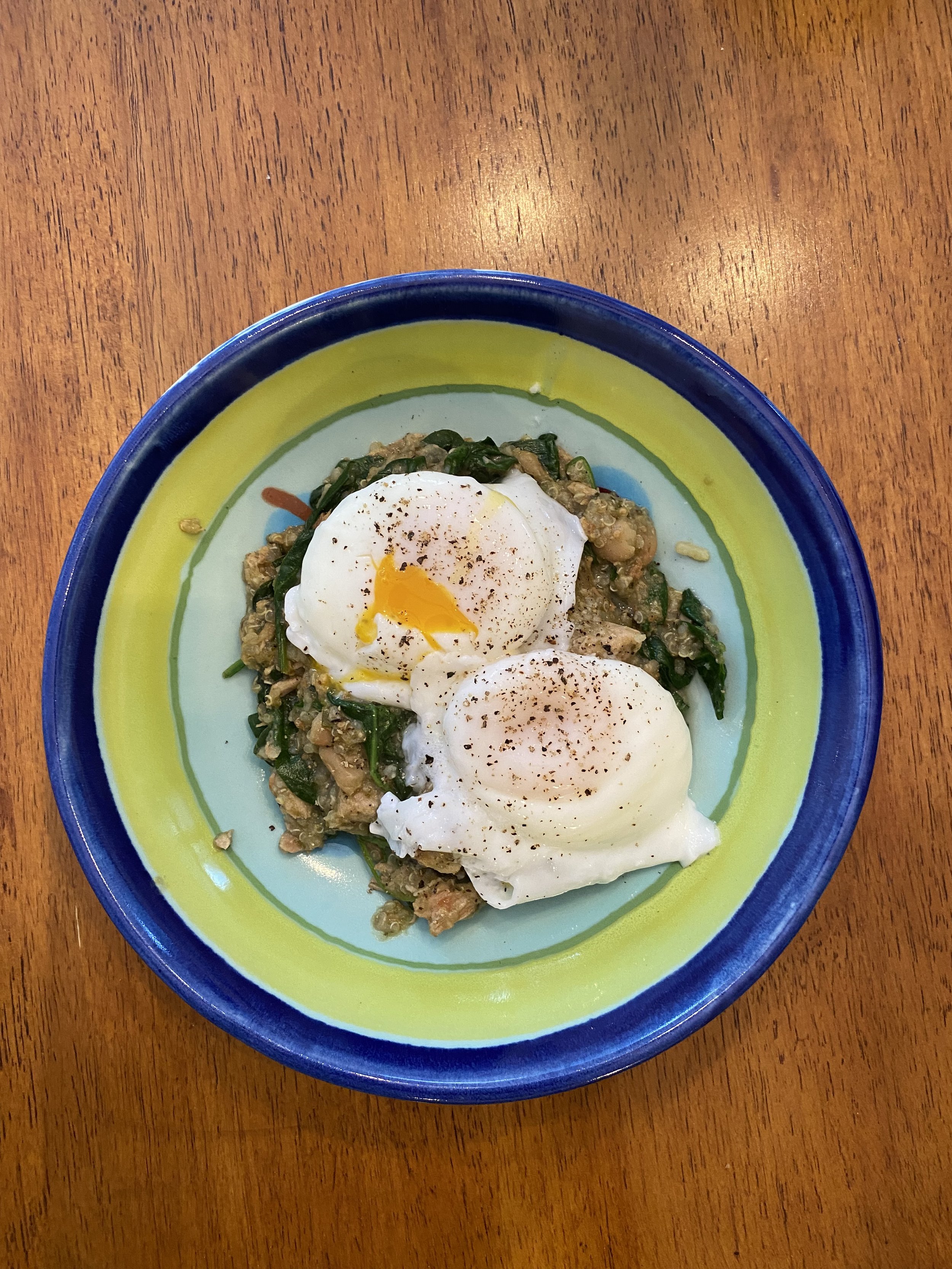
Now it's my most favorite go-to for breakfast.Last night’s roasted vegetables, meat protein, and/or grains + 2 eggson top.
If you have leftover chicken, steak, taco meat, sausage, or fish, put it to work.It’s savory, grounding, and very blood-sugar friendly — a solid option if you feel best with something hearty in the morning.
-
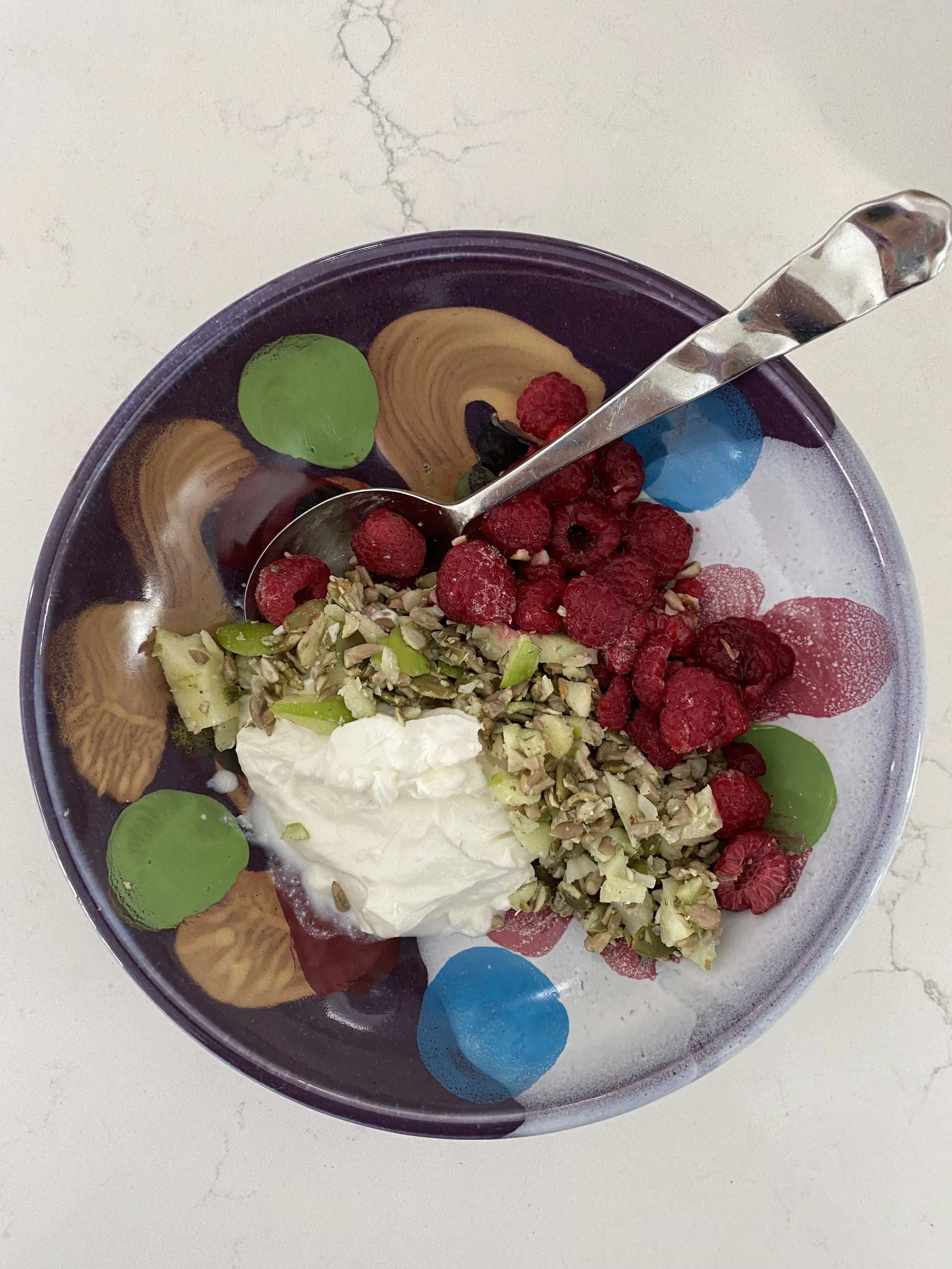
This is delicious, nutritious, and quick to prepare…
Just put into a food processor:
- 1 Granny Smith apple
(cut into big chunks)
-⅓ cup of pumpkin seeds
-⅓ cup of sunflower seeds
-¼ cup coconut
-pinch of salt
(recipe makes 2 servings with about 12 grams of protein per serving)
Pulse to desired consistency. Add to yogurt and berries. Dependent upon amount of yogurt, this is an example of where you might want to add some protein powder for a boost to get to 30. -
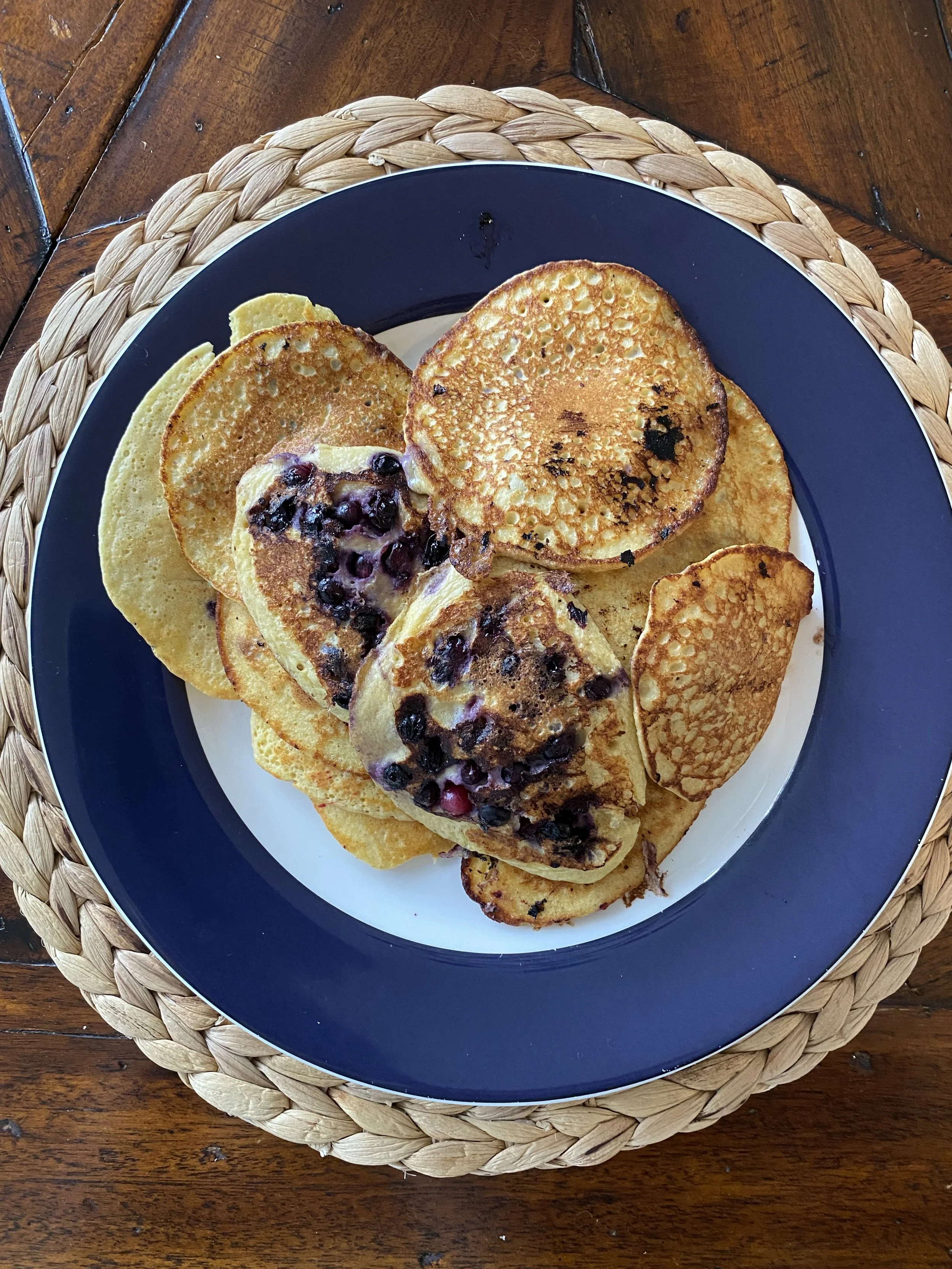
For mornings when you want something that feels more like comfort food.
Protein pancakes can absolutely fit — especially when paired with yogurt or berries.
A quick note on blood sugar:
These aren’t quite as stabilizing as a purely savory, fiber-forward meal, but when built with protein first, they’re far different from traditional pancakes and work well for many people.Put into a Blender:
½ cup of old fashioned oats2 large eggs
½ cup of cottage cheese
splash of vanilla
pinch of salt
Blend then cook on stovetop like regular pancakes. This is one serving and hits the protein mark.
There’s no “best” breakfast — only the one that:
Fits your palate.
Fits your schedule.
Helps you feel steady and fueled.
The goal isn’t perfection. It’s building a protein-forward anchor you can return to again and again. And remember, variety counts - different nutrients come with every different thing we eat … so putting recipes like the above on rotation can be a giant step forward!